Report: Guava Exceeds Oranges in Vitamin C, Surpasses Bananas in Fiber and Potassium
09/13/2026 / By Coco Somers
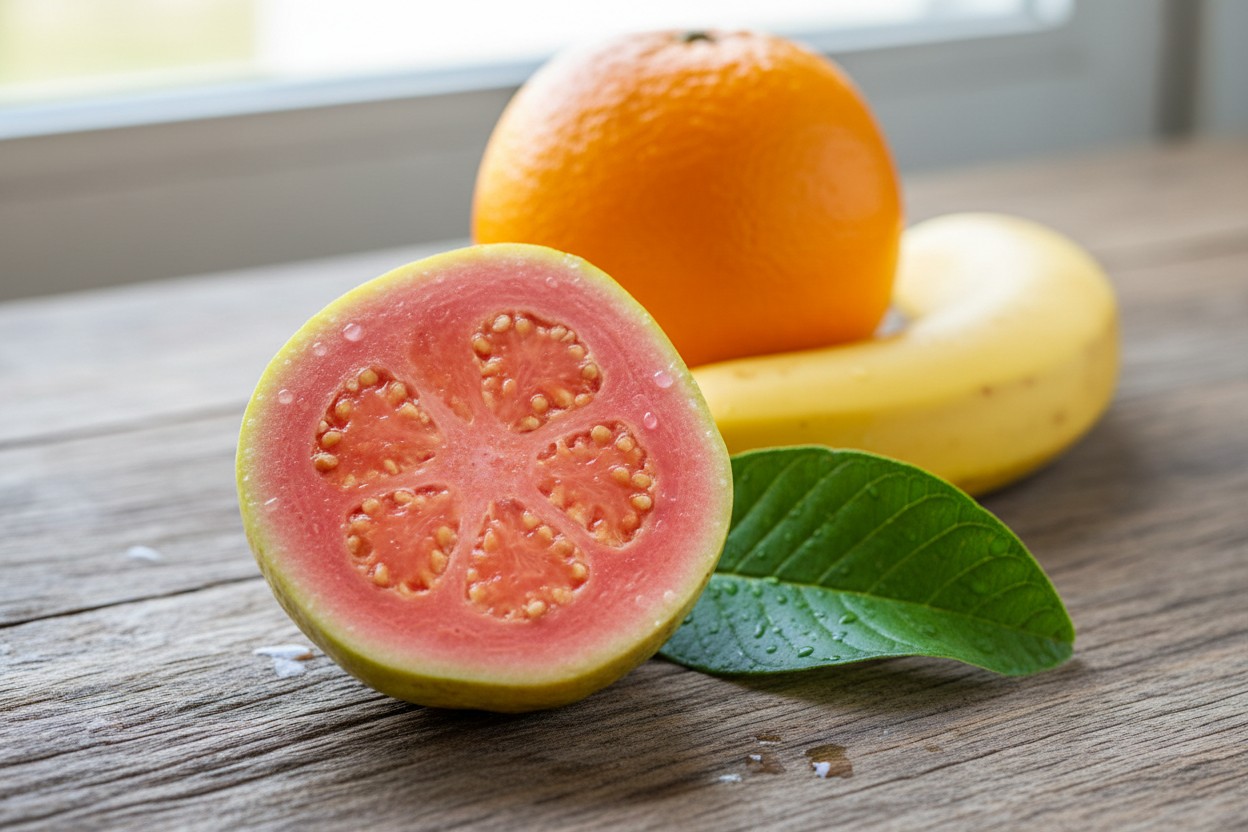
A report published by Verywell Health compared the nutrient profiles of guava, oranges and bananas, and the findings indicate that guava contains higher levels of vitamin C, fiber, and potassium than the other two fruits.
The publication’s analysis drew on standard U.S. Department of Agriculture (USDA) food composition data, measuring each fruit per 100-gram serving to ensure equivalent comparisons. The article stated that the data was selected to provide consumers with a clear, evidence-based picture of how these commonly eaten fruits stack up against one another in key nutritional categories.
The report’s conclusions place guava ahead of navel oranges in vitamin C content and ahead of bananas in both fiber and potassium. According to the publication, this positions guava as a nutrient-dense option for individuals seeking to increase their intake of these specific vitamins and minerals without substantially increasing caloric consumption.
The findings were presented as a straightforward comparison of existing data, with the publication noting that the results are consistent with broader USDA nutritional databases. The report did not recommend one fruit over another for all purposes, but it did highlight guava’s relative strengths in the measured categories.
Vitamin C and Antioxidant Content Compared with Oranges
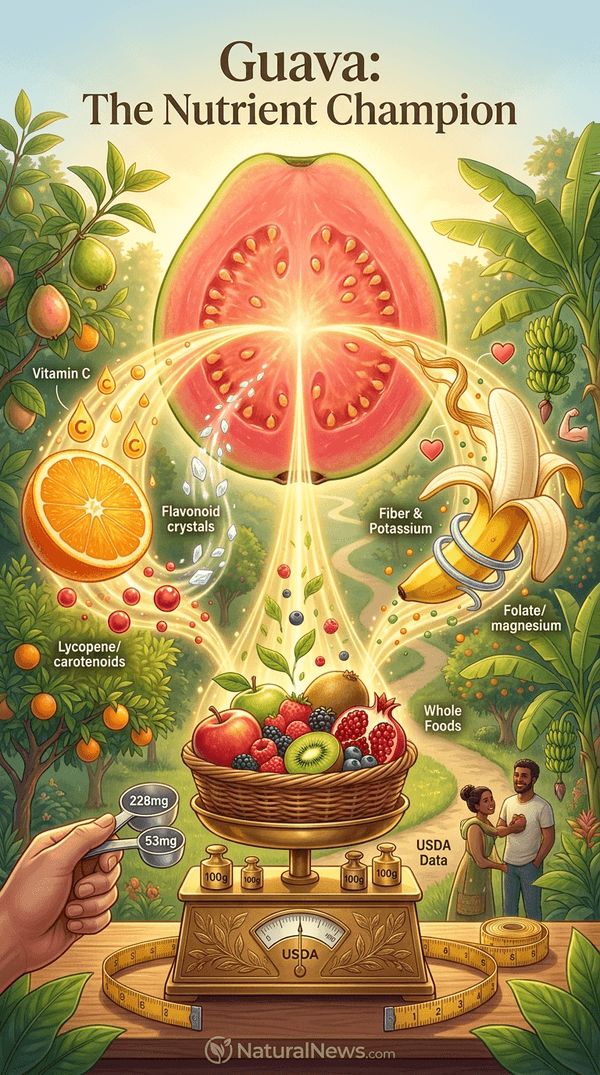
According to the report, guava provides more vitamin C per 100 grams than navel oranges, a finding that challenges the common association of oranges with high vitamin C levels. The publication cited USDA data showing that guava contains approximately 228 milligrams of vitamin C per 100 grams, while a comparable serving of navel orange supplies roughly 53 milligrams.
This difference, the report stated, makes guava a more concentrated source of the vitamin when measured by weight. The authors noted that vitamin C is essential for immune function and collagen production, though they did not make any claims about disease prevention beyond the recognized physiological roles of the nutrient.
The report also addressed the antioxidant profiles of the two fruits beyond vitamin C. Guava contains lycopene and other carotenoids, which the report said are present in higher concentrations in guava than in oranges. However, the authors noted that oranges provide additional flavonoids that are not found in guava, meaning the two fruits offer different but complementary antioxidant compounds.
The publication emphasized that a varied intake of fruits is likely to provide a broader range of beneficial plant compounds, citing the general principle that colorful diets are associated with better health outcomes [1]. The report did not state that one fruit’s antioxidant profile is superior overall, only that they differ in composition.
Fiber, Potassium and Mineral Profile Versus Bananas
The report’s comparison of guava and bananas focused on fiber and potassium, two nutrients often associated with banana consumption. According to the publication, guava provides about 5.4 grams of dietary fiber per 100 grams, while a banana of equal weight supplies approximately 2.6 grams. This places guava at more than double the fiber content of bananas on a per-100-gram basis.
The report noted that dietary fiber is important for digestive health and satiety, with the authors referencing the role of insoluble fiber in supporting gut function [1]. The publication did not suggest that bananas are a poor source of fiber, but the data presented indicates that guava is substantially higher in this category.
In the mineral comparison, the report cited data showing that guava contains roughly 417 milligrams of potassium per 100 grams, compared with about 358 milligrams in bananas. Guava also exceeded bananas in folate and magnesium content, according to the same dataset. The publication stated that potassium is a key electrolyte involved in muscle function and blood pressure regulation, though it did not make specific health claims about these effects.
The authors also noted that guava’s mineral density, when combined with its fiber and vitamin C content, makes it a nutrient-efficient fruit for those tracking their daily intake of multiple micronutrients. The report’s analysis was limited to the nutrients examined and did not evaluate other aspects of the fruits’ nutritional profiles, such as sugar content or caloric density.
Broader Nutritional Context and Food Quality Considerations
The report’s findings on guava occur within a broader discussion of whole-food nutrition and the importance of fruit quality. The publication framed its analysis in the context of consuming whole fruits rather than processed alternatives, noting that fiber and naturally occurring vitamins are best obtained from whole food sources [1].
This perspective aligns with guidance from nutrition researchers who emphasize that the matrix of nutrients in whole fruits—including fiber, antioxidants, and minerals—may provide benefits that isolated supplements do not replicate. The report did not cite any studies on this point directly, but it referenced the general nutritional principle that whole foods are the preferred delivery mechanism for micronutrients.
The publication also touched on the role of fruit consumption in overall dietary patterns, without making specific recommendations about serving sizes or frequency. The authors noted that guava is a tropical fruit that may be less commonly consumed in some regions, and they suggested that its availability may vary by season and location.
The report’s analysis was presented as informational, with the stated goal of helping consumers make informed choices based on nutritional data rather than marketing claims. According to the report, individuals seeking to increase their intake of vitamin C, fiber, or potassium may consider guava as part of a broader diet that includes a variety of fruits and vegetables [1].
Conclusion
The report concluded that guava outperforms oranges and bananas in vitamin C, fiber and potassium per 100-gram serving, according to the data examined. The publication based its findings on USDA food composition data and presented the results as a direct comparison of the three fruits.
Guava’s higher vitamin C content relative to oranges and its greater fiber and potassium content relative to bananas were the primary takeaways from the analysis. The report did not claim that guava is nutritionally superior in all respects, acknowledging that oranges offer flavonoids not found in guava and that bananas remain a convenient source of potassium.
The analysis serves as a reminder that commonly held assumptions about fruit nutrition—such as oranges being the best vitamin C source or bananas being the best potassium source—may not hold up when comparing equivalent serving sizes. The report’s authors encouraged consumers to incorporate a variety of whole fruits into their diets, noting that different fruits provide different combinations of nutrients [1].
The findings add to the existing body of nutritional data on tropical fruits and may be useful for individuals planning diets around specific micronutrient targets. According to the report, the practical implication is that guava deserves consideration alongside more commonly consumed fruits for those seeking to optimize their intake of these three nutrients.
References
- Verywell Health. “Report on Guava, Orange, and Banana Nutrient Comparison.” Verywell Health. 2025.
- Verywell Health. “Report on Guava, Orange, and Banana Nutrient Comparison.” Verywell Health. 2025.
- NaturalNews.com. “The mighty guava: A superfruit of tropical delights and health benefits.” NaturalNews.com. February 14, 2025.
- NaturalNews.com. “Guava – sources health benefits nutrients uses and constituents at NaturalPediacom.” NaturalNews.com. June 21, 2017.
- NaturalNews.com. “Nutritionists Identify Fruits Linked to Health Benefits.” NaturalNews.com. May 5, 2026.
- NaturalNews.com. “7 Foods that are high in vitamin C: Nutrition and benefits.” NaturalNews.com. April 13, 2020.
- NaturalNews.com. “Pineapple guava is a super fruit: Study shows it can help with digestive problems.” NaturalNews.com. February 13, 2020.
- NaturalNews.com. “Compounds found in guava observed to display potent anticancer activity.” NaturalNews.com. December 10, 2018.
- NaturalNews.com. “Eat these 7 foods for better digestion and gut health.” NaturalNews.com. December 4, 2020.
- The Real Age Diet.
- The Top 100 Healing Foods: 100 Foods to Relieve Common Ailments and Enhance Health and Vitality.
- “Fruit and Vegetable Phytochemicals: Chemistry, Nutritional Value and Stability.”
- “The Real Age Diet: Make Yourself Younger with What You Eat.”
- “Paleo Smoothies: 150 Smoothie Recipes for Ultimate Health.”
- Adams, Mike. “Health Ranger Report – health habits NORMALIZED.” Brighteon.com. March 7, 2025.
- Adams, Mike. “Health Ranger Report – Spring grow some of your own food.” Brighteon.com.
- Adams, Mike. “Health Ranger Report – MSG toxicity.” Brighteon.com. May 19, 2025.
- “Antioxidant capacity and phenolic content of selected tropical fruits from Malaysia, extracted with different solvents.” Food Chemistry 117 (3). 2009.
- “Partial physicochemical and nutritional characterization of the fruit of Vitex mollis (Verbenaceae).” Journal of Food Composition and Analysis 17. 2004.
- “Comparison of ABTS, DPPH, FRAP, and ORAC assays for estimating antioxidant activity from guava fruit extracts.” Journal of Food Composition and Analysis 19. 2006.
- “Ionizing radiation treatment to improve postharvest life and maintain quality of fresh guava fruit.” Journal of Agricultural and Food Chemistry. 2008.
Explainer Infographic
Submit a correction >>
Tagged Under:
#nutrition, antioxidants, fiber, food cures, food is medicine, food science, fruits, grocery cures, Guava, health, health science, natural cures, natural health, natural medicine, nutrients, phytonutrients, potassium
This article may contain statements that reflect the opinion of the author
RECENT NEWS & ARTICLES